A wall display saves furniture space, but it replaces a tabletop decision with a structural one. The stand must fit both swords, the wall must support the loaded rack, and the mounting points must stay secure through normal household vibration. Included hooks are useful, but they are not proof that every wall, anchor, screw, or location is suitable.
The Safe Haven Armor Double Sword Stand is listed at $34.99. Its product page says it displays two katanas and comes with hooks for wall installation. The listing does not publish a load rating, wall-material requirements, fastener specifications, stud-spacing requirements, groove width, padding, wood species, or a universal-fit promise. Plan the installation around your exact swords and wall, not around a generic product category.
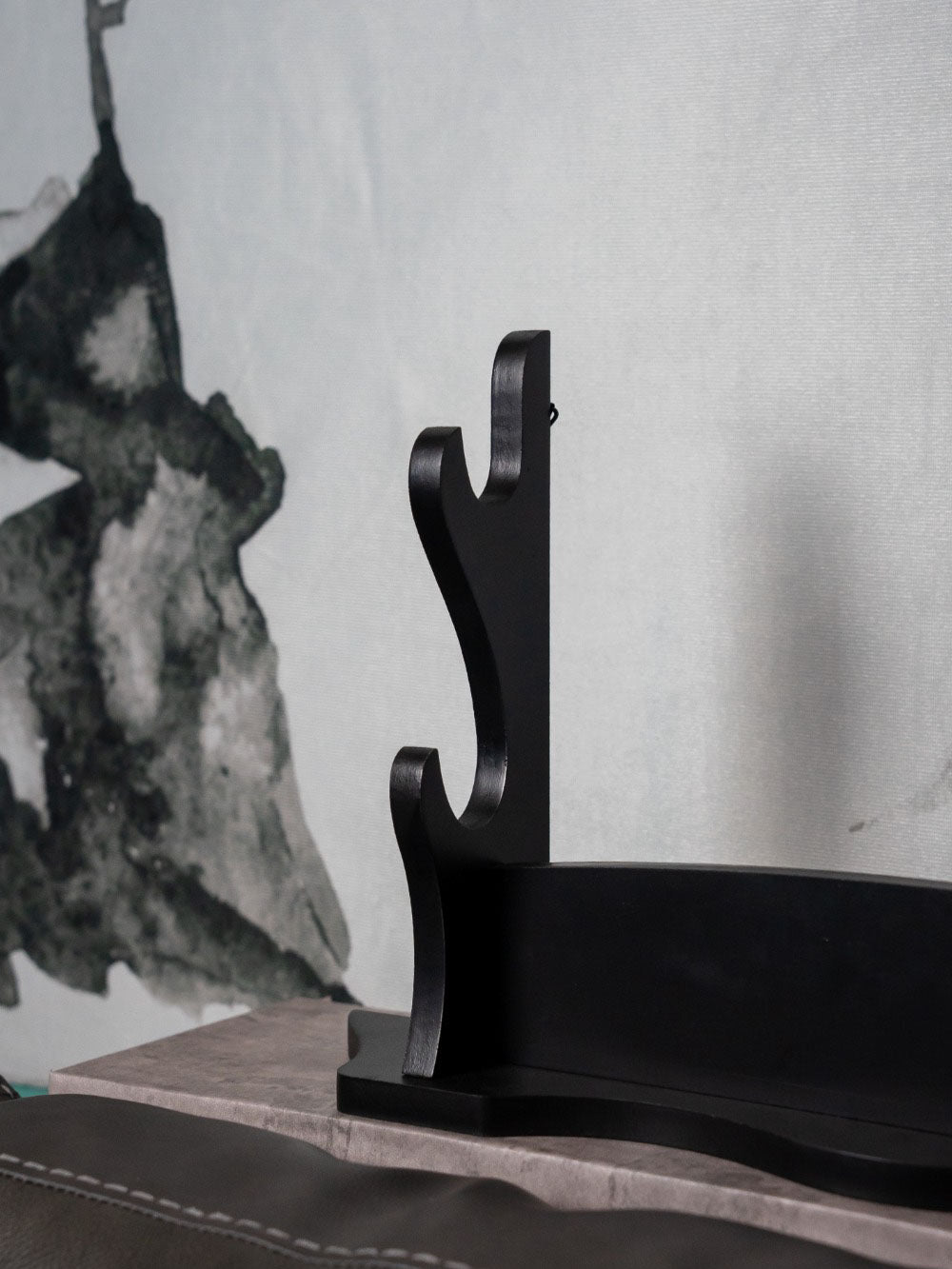
Confirm what is included before planning the wall
"Comes with hooks" does not answer every installation question. Hooks may refer to the sword-support pieces, wall-mount hardware, or both. The current product page does not specify screws, anchors, washers, templates, or hardware ratings. Ask Safe Haven Armor for a current packing-list photo and installation instructions before buying additional hardware.
Also request the assembled dimensions in inches, mounting-hole count and spacing, stand weight, stated load rating if one exists, and the recommended wall type. If the listing's dimension diagram is current, compare it with the intended space and ask whether it applies to the exact stock being shipped. Treat any missing value as unknown rather than filling it with a competitor's specification.
When the box arrives, inventory the parts on a clean floor. Do not substitute hardware only because it physically fits a hole. Fastener length, diameter, head shape, corrosion resistance, anchor type, and wall construction all affect the installation. If instructions and hardware do not agree, stop and contact support.
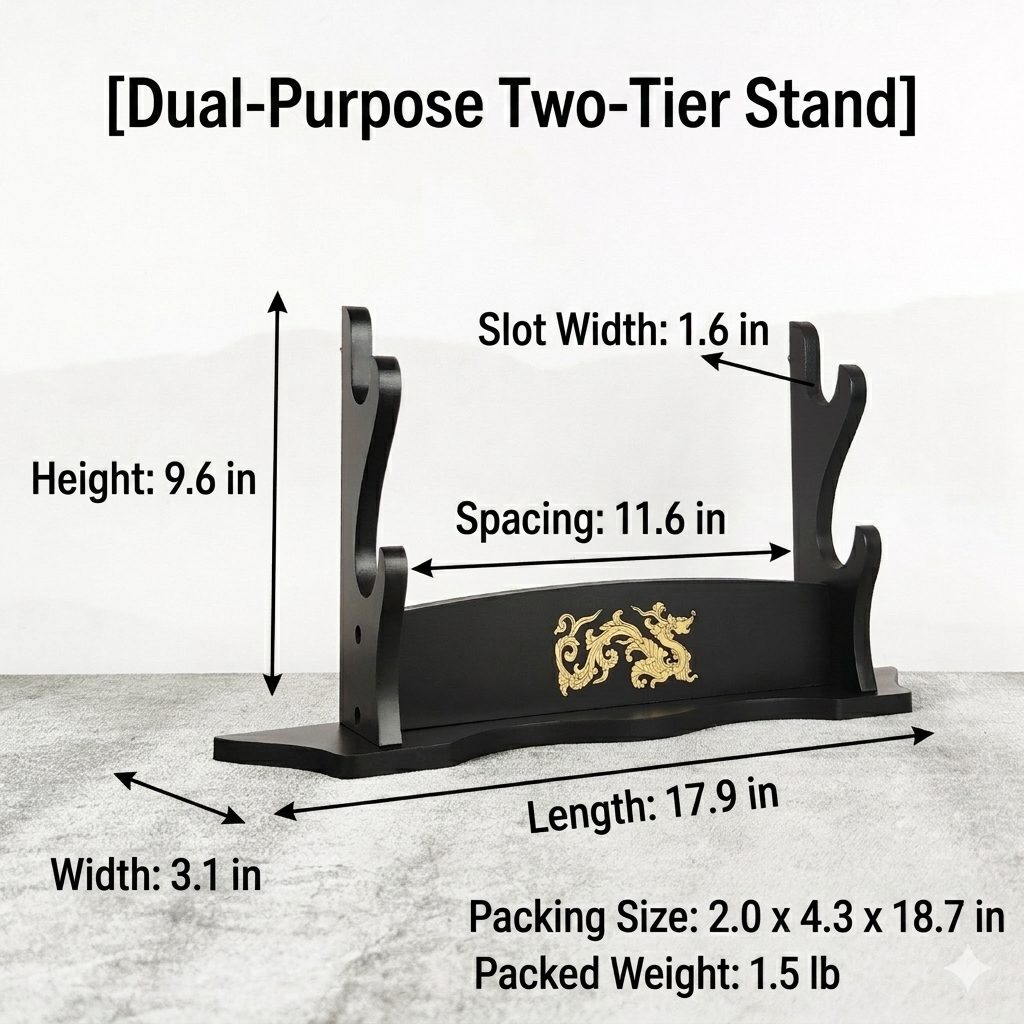
Measure the two swords as a loaded system
Two tiers do not guarantee that any two katanas fit together. Measure each sheathed sword in inches: overall length, scabbard width at the support points, maximum guard projection, handle length, and the vertical clearance needed to lift the upper sword. Compare the pair, because a wide guard or thick scabbard can crowd the other tier.
Use painter's tape on the wall to mark the full loaded width, not just the rack width. Extend the tape to both scabbard tips and handles. Add several inches for both hands and enough vertical space to remove the upper sword without contacting the lower one, ceiling, shelf, or artwork.
Perform a harmless rehearsal with empty scabbards when possible, or with rolled towels that match the approximate length and diameter. Stand where you would normally lift each sword. If the motion crosses a doorway, light fixture, television, or walking path, choose a different location before drilling.
Identify the wall before choosing anchors
Drywall over wood studs, drywall over metal framing, masonry, tile, and plaster-and-lath require different methods. A generic plastic anchor is not automatically appropriate for a heavy, valuable display. The loaded rack also experiences leverage when a long sword is placed or removed.
Use a reliable method to identify wall construction, utilities, and structural framing. Do not drill where electrical wiring, plumbing, or other hidden services may be present. If the mounting holes do not align with framing, do not improvise by angling screws or relying on an anchor whose rating and wall compatibility are unknown.
A qualified installer should choose the fastening method when wall construction, concealed services, hardware rating, or load path is uncertain. Follow the stand instructions, fastener manufacturer's requirements, building rules, and any lease or property restrictions. A successful installation is not simply one that feels tight during the first minute.
Mount and test the empty rack first
Assemble and mount only as directed. Before loading swords, confirm that the stand sits level, mounting points are fully seated, joints do not open, and no component rotates or pulls away under gentle hand pressure. Do not hang from the rack, bounce it, or use a dynamic test that exceeds its intended function.
Allow any installation steps specified by the hardware manufacturer to finish before loading. Recheck level and visible fasteners. Photograph the final empty installation so you have a baseline for future inspections.
Load the lower tier first with the lighter or less top-heavy sheathed sword. Step back and inspect the wall connection and rack alignment. Add the second sword only after the first position remains stable. Nothing should be wedged into a groove, and no guard or fitting should bear against the other sword or wall.
Remove and replace each sword once with two hands. The motion should not lift the rack, loosen a hook, scrape the wall, or pull the other sword from its rest. If a normal handling motion moves the installation, stop using it until the cause is corrected.
Protect the scabbards and inspect the rack over time
The listing does not promise padded rests. Before loading, inspect each contact point under clean light. Look for dust, burrs, rough finish, exposed hardware, dried glue, or a sharp edge that could mark a lacquered saya. If protection is needed, use a clean, non-abrasive material compatible with the scabbard finish.
Thick felt can reduce usable groove depth. Slick material can let a round scabbard move. Adhesive can migrate, stain, or leave residue. Test additions away from a visible area and make sure they do not interfere with secure seating. Keep swords sheathed unless the maker and your safety plan clearly support another arrangement.
Set a recurring inspection schedule. Look for loose fasteners, wall cracking, rack movement, compressed padding, finish wear, and changes after doors slam, furniture moves, or seasonal humidity shifts. Remove the swords before tightening, cleaning, or investigating the wall connection. Do not let sword oil transfer to the rack.
Choose a location that limits consequences
A wall display should remain inaccessible to children, pets, and untrained visitors. Do not install it above a bed, sofa, crib, frequently occupied desk, television, aquarium, stair, or doorway. Avoid direct sun, damp walls, heat vents, speakers, and high-vibration locations.
This stand is a reasonable candidate when you have two compatible sheathed swords, a verified wall and fastening plan, enough removal clearance, and a low-traffic location. It is a poor fit when you need a locking enclosure, child-resistant storage, published load data, adjustable tier spacing, or an installation that avoids drilling.
Before ordering, confirm the current packing list, dimensions, mounting-hole spacing, hardware requirements, and two-sword fit. For current-stock questions, email support@safehavenarmor.com. Then review the latest price, availability, exact product photos, and diagram on the Double Sword Stand product page.